Every time someone charges their car, there's a powerful little computer sitting idle inside the charger. ChargeBnB puts those computers to work.
How ChargeBnB turns home chargers into a distributed AI network — explained in 90 seconds.
You know how Airbnb turned spare bedrooms into hotel rooms? ChargeBnB does something similar — but with computing power.
Every smart EV charger has a computer inside it. A small one, but surprisingly powerful. Most of the time, that computer is doing absolutely nothing — just waiting for someone to plug in their car.
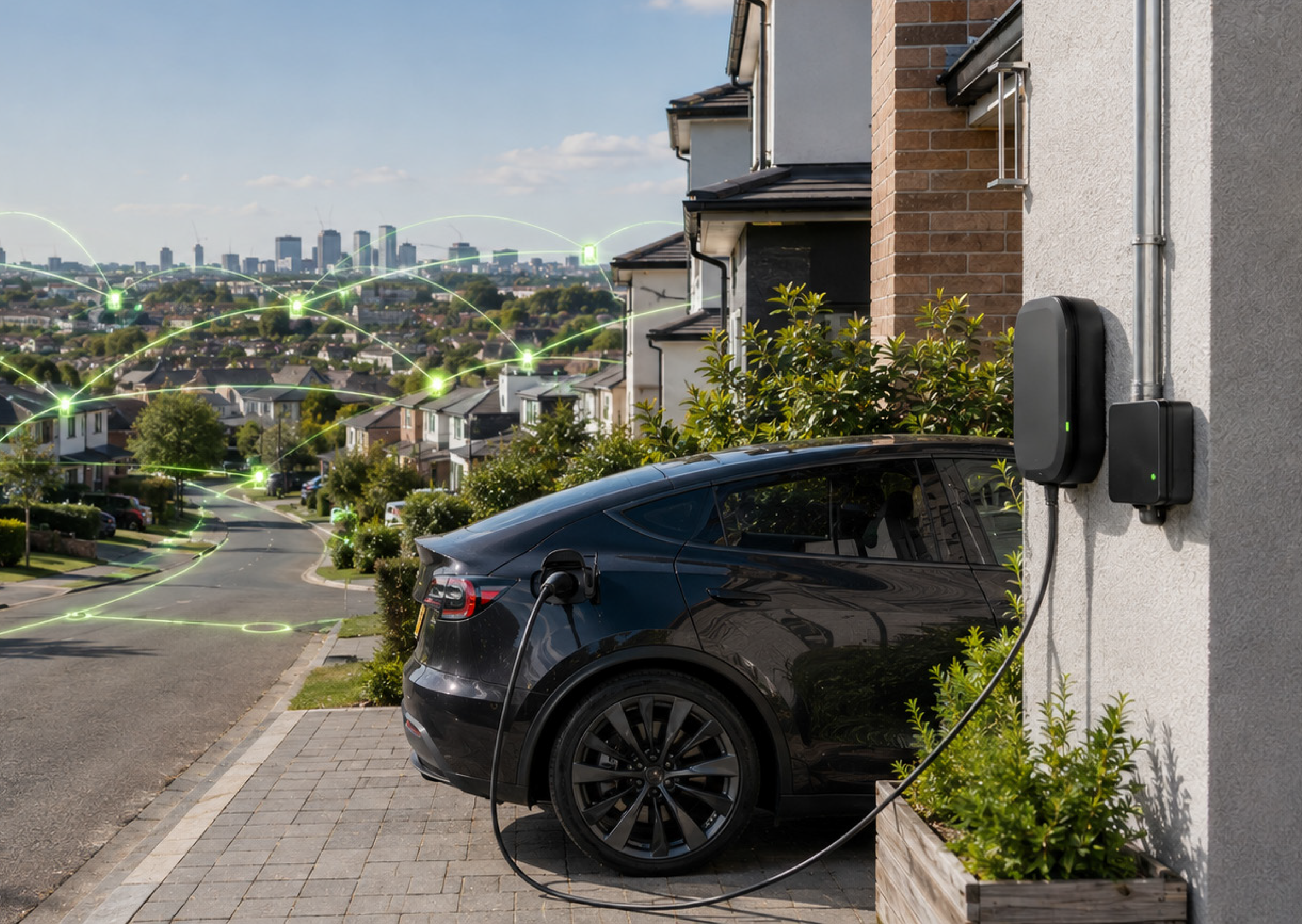
ChargeBnB connects thousands of those idle computers together into a single network. Individually, each one is small. Together, they form something extraordinary — a distributed supercomputer spread across millions of homes, driveways, and car parks.
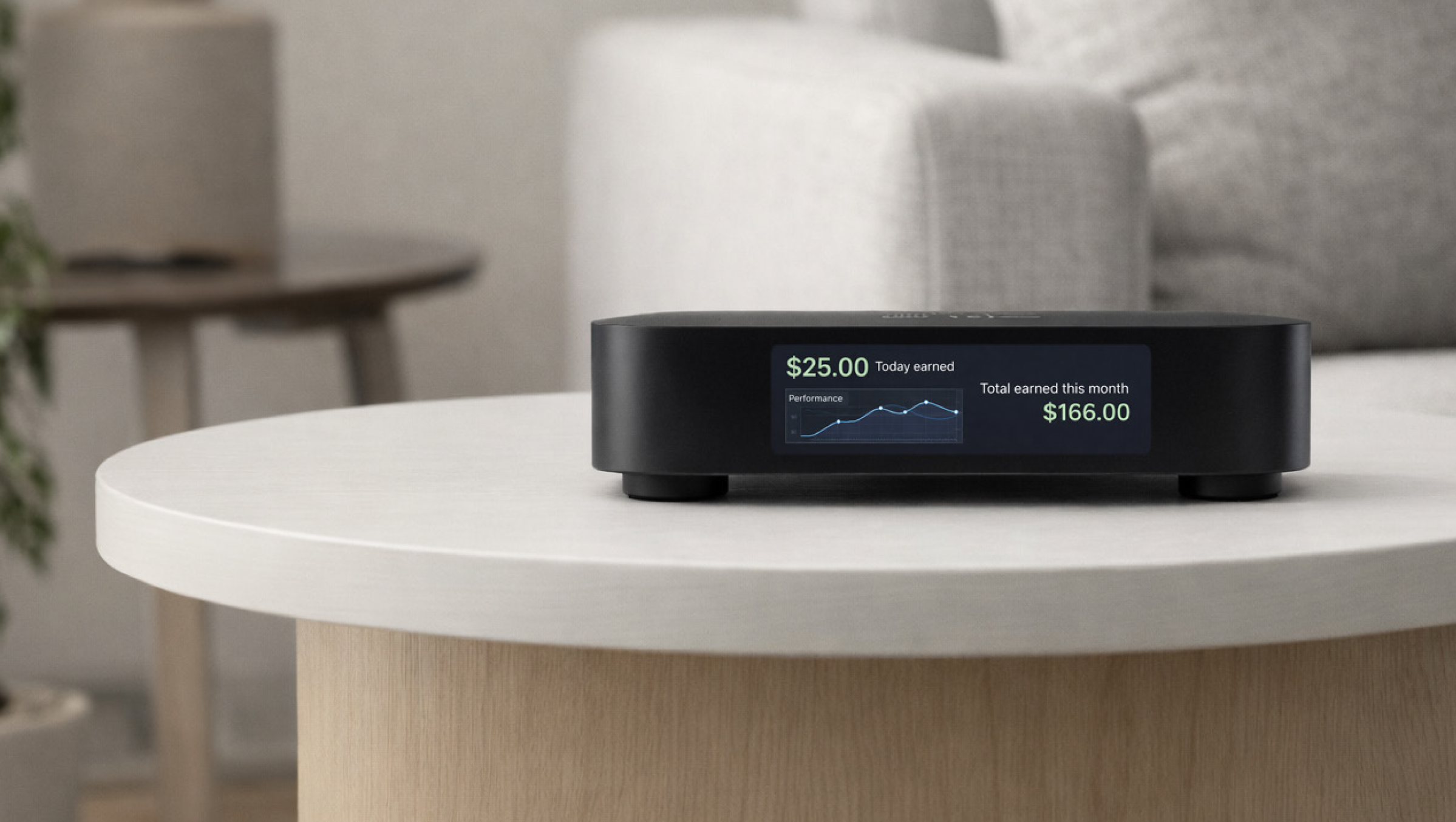
Companies that build AI — the ones making chatbots, self-driving car software, medical imaging tools — need massive amounts of computing power. Right now, they rent it from Amazon, Google, or Microsoft's giant data centres.
The problem? Those data centres are far away, expensive, and use enormous amounts of energy (mostly for cooling). Sometimes, AI needs to think fast — in milliseconds. Sending data to a warehouse in another country and back just isn't fast enough.
That's where ChargeBnB comes in. Instead of one giant data centre, imagine millions of small computers — right next to where people live and work. Faster. Cheaper. Greener. No industrial cooling required, because each node uses less power than a lightbulb.
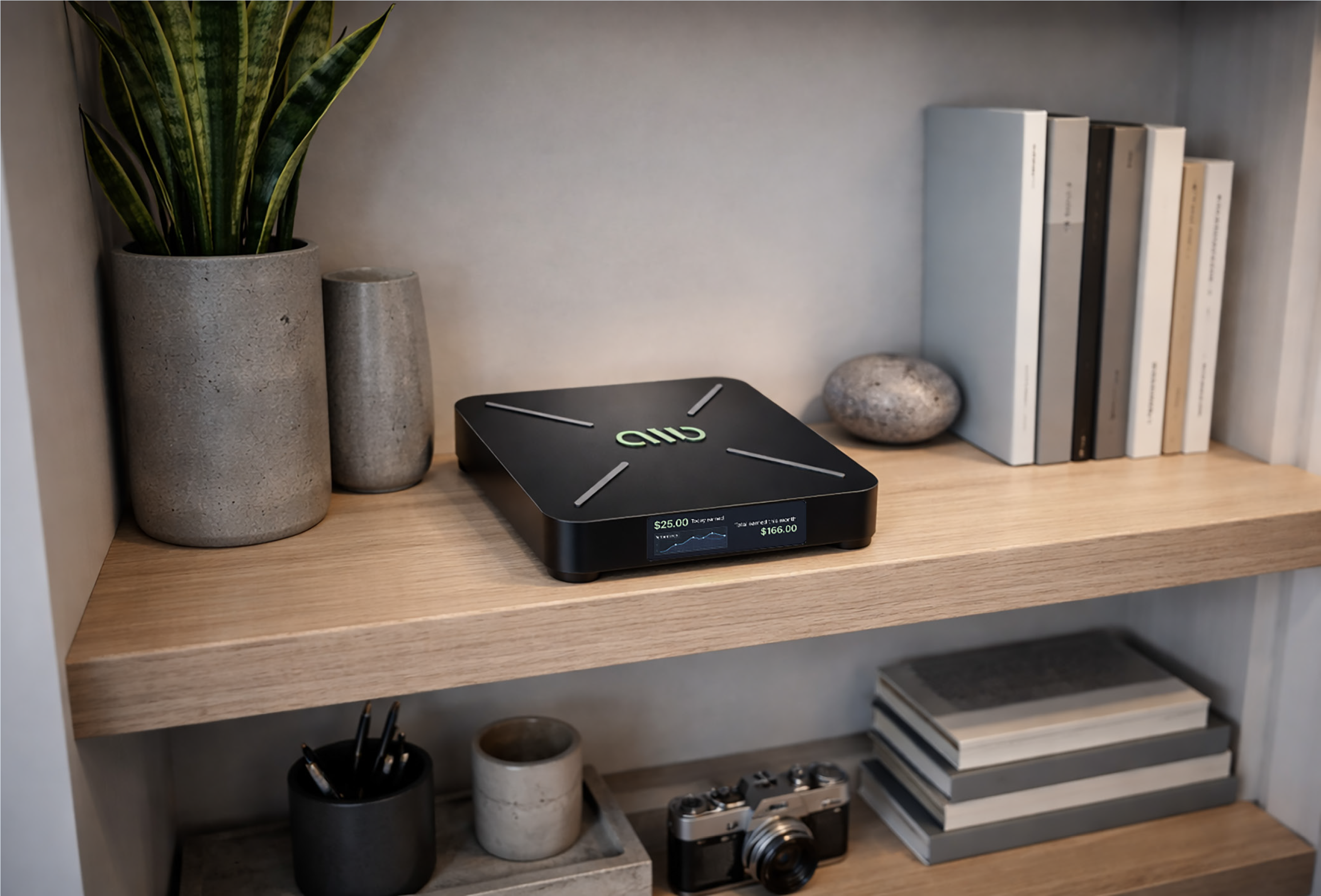
Here's the brilliant part for homeowners:
1. They earn money when someone charges their car on their driveway 2. They earn money when companies use their charger's computer for AI work
Our model has a typical host earning around €45 a month in Year 1. That's the price of a decent dinner out — every single month — from a box on your wall you'd barely notice. Hosts with ChargeBnB's AI-enabled hardware could earn several times that.
And for investors? The network gets more valuable with every charger that joins. More chargers mean better coverage. Better coverage attracts more businesses. More businesses mean higher payouts for hosts. Higher payouts attract more hosts. It's a flywheel — once it starts spinning, it accelerates on its own.
ChargeBnB is raising €25 million to build this network.
The target: 2.1 million connected nodes within three years. Year 3 revenue: €926.7 million. Profit margin: 48.2%. The plan is to build a network bigger than the world's largest data centres — but distributed across millions of ordinary homes.
It costs 60% less to run than traditional data centres. No warehouse. No industrial cooling. No massive electricity bill. Just millions of small, smart devices quietly earning their owners money while helping AI companies do their work faster and closer to their customers.
You’ve finished this level. Pick up where you left off with more technical and financial detail.
Three ways to take the next step with ChargeBnB.
Access detailed financials, legal documents, and technical architecture.