ChargeBnB is building the world's largest distributed edge computing network by embedding AI capabilities into EV charging hardware.
How ChargeBnB turns home chargers into a distributed AI network — explained in 90 seconds.
Centralised cloud data centres handle model training well, but inference is a different story. Latency-sensitive workloads — computer vision, real-time LLM inference, autonomous vehicle processing, IoT analytics — need compute close to users and data sources.
Backhauling every API request to a distant AWS region creates unacceptable latency, bandwidth costs, and privacy concerns. The industry needs geographically distributed compute — but deploying traditional edge infrastructure (colocation, active cooling, enterprise SLAs) is 10–50x more expensive than ChargeBnB's residential model.
ChargeBnB's insight: millions of EV chargers are being installed in homes, each containing compute hardware that sits idle most of the day. Why build new infrastructure when you can activate existing infrastructure?

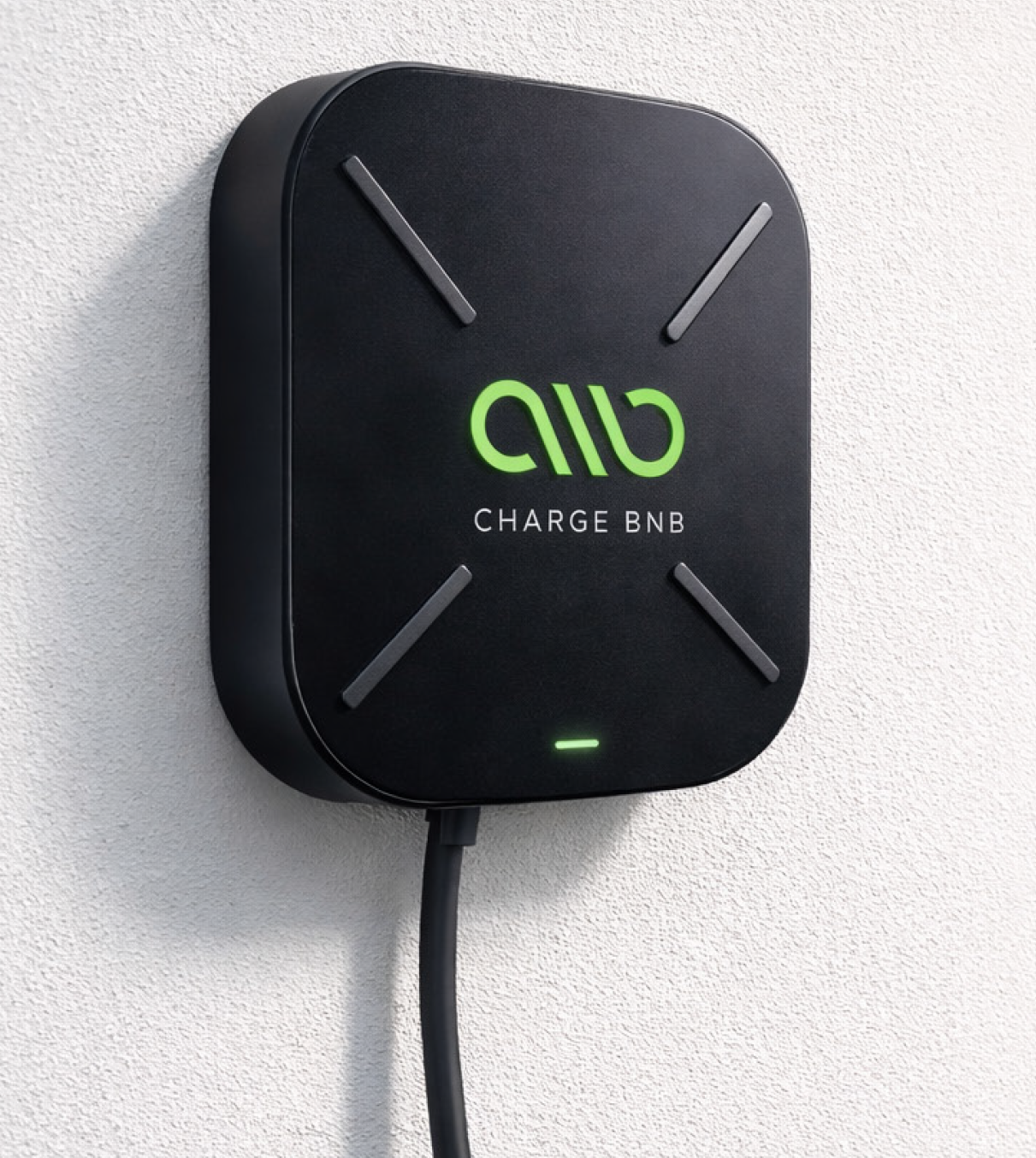
ChargeBnB's proprietary hardware runs NVIDIA Jetson Orin-class silicon, delivering up to 67 INT8 TOPS (Tera Operations Per Second) of AI inference per node — all within a residential power envelope of just 7–25W. No active cooling required.
That's the key cost advantage: traditional edge nodes in data centres need industrial HVAC systems consuming thousands of watts. ChargeBnB nodes use less power than a lightbulb. At scale, this means 60% lower cost per unit of compute compared to conventional data centre infrastructure.
Fleet composition: 80% integrated third-party chargers providing P2P charging + basic telemetry, and 20% proprietary ChargeBnB hardware (chargers + Home Pods) providing both charging and full edge compute capability.
Hardware is sold at cost: €500/charger (BOM €420), €400/Home Pod (BOM €340). Hosts recover investment within 5–8 months through edge compute revenue sharing.
Enterprises access the distributed network through an OpenAI-compatible API. The platform handles everything:
• Control Plane: Authentication, identity management, policy enforcement, billing • Data Plane: Encrypted overlay networking via WireGuard, NAT traversal (STUN/TURN), relay infrastructure • Workload Scheduler: Latency-aware routing, SLA enforcement, geographic targeting • Observability: Telemetry ingestion, analytics, real-time performance monitoring
Pricing: €0.002/simple inference → €0.15/complex LLM generation, or reserved capacity pools with guaranteed SLA tiers.
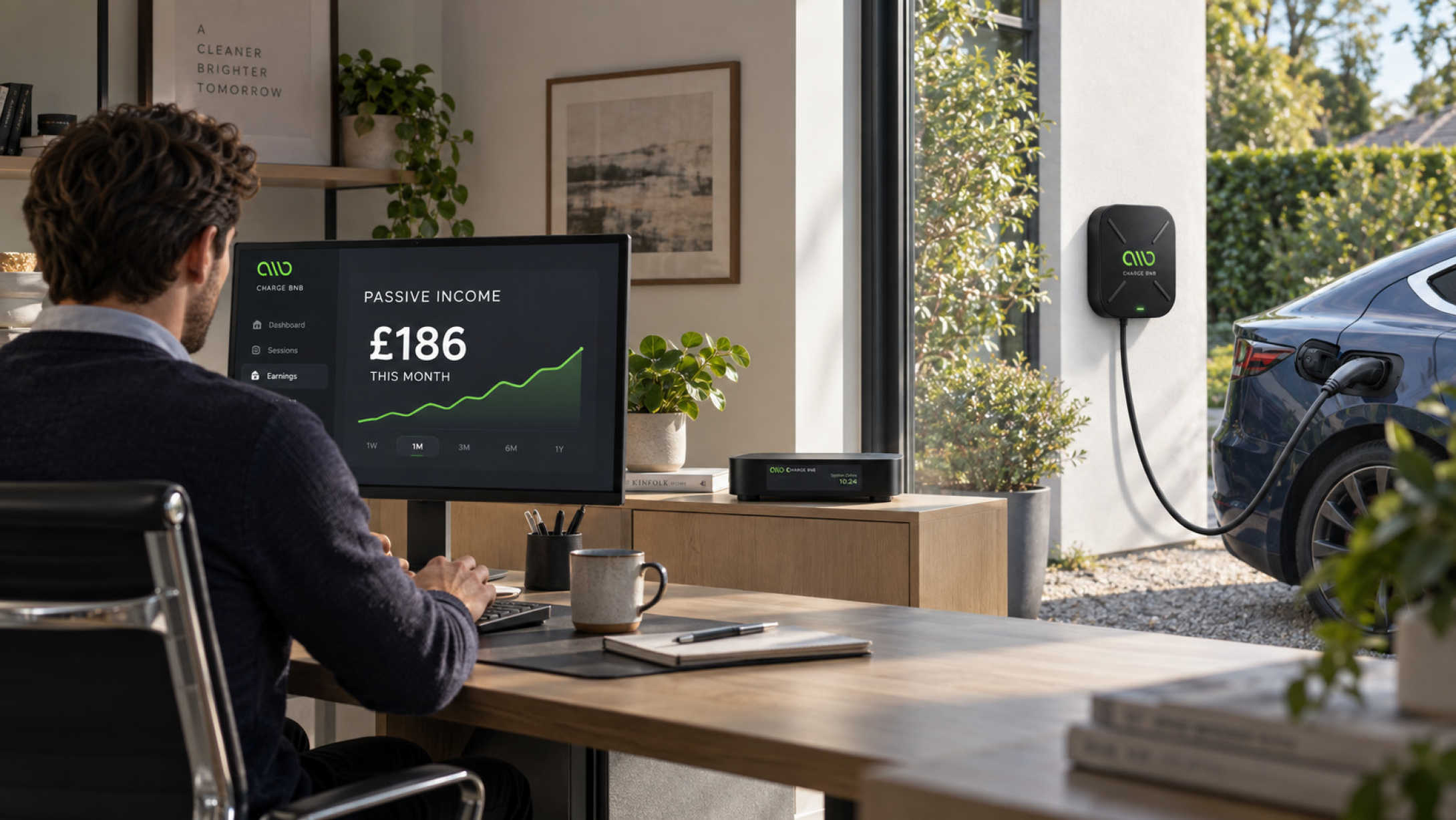
Edge compute revenue per node: existing chargers €24/month (Y1) → €96/month (Y3); proprietary hardware €100/month → €400/month. Platform retains 25% commission; 75% goes to the host.
The edge computing market is projected to reach $43.4 billion by 2027 (CAGR 37.4%). The EU's Digital Decade initiative targets deployment of highly secure edge nodes by 2030, supporting digital sovereignty.
ChargeBnB's core TAM: €150 billion by 2030 — €80B residential EV charging + €70B property-based edge computing. No competitor addresses both P2P charging AND edge compute simultaneously.
Cloud providers (AWS, Azure, Google) lack physical charging infrastructure and residential relationships. Charging networks (ChargePoint, EVgo) lack distributed systems expertise. CDN players (Akamai, Fastly) operate from telecom facilities at 10–50x higher cost.
ChargeBnB sits in the unique intersection: high host relationship AND high compute monetisation.
Series A: €25M for 36 months of runway.
| Revenue Stream | Year 1 | Year 2 | Year 3 |
|---|---|---|---|
| P2P Charging | €980K | €11.3M | €36.9M |
| Edge Computing | €426K | €33.3M | €444.3M |
| Hardware Sales | €0 | €5.0M | €445.5M |
| Total | €1.4M | €49.6M | €926.7M |
EBITDA margin stabilises at ~48% from Year 2. Breakeven at Month 16 with 20-month post-breakeven buffer. Network scale: 100K → 530K → 2.1M nodes.
The EU's Digital Europe Programme (€8.1B) and Innovation Fund (€7.1B+) provide additional soft funding opportunities — ChargeBnB can offset 30–50% of CapEx through alignment with EU policy mandates.
You’ve finished this level. Pick up where you left off with more technical and financial detail.
Three ways to take the next step with ChargeBnB.
Access detailed financials, legal documents, and technical architecture.